
Trial Presentation Services: How Legal Teams Prepare Exhibits and Multimedia for the Courtroom
Trial preparation involves more than organizing arguments and reviewing evidence. Legal teams may also need to prepare exhibits, deposition video, documents, graphics, demonstratives, and other multimedia so materials can be presented efficiently when needed.
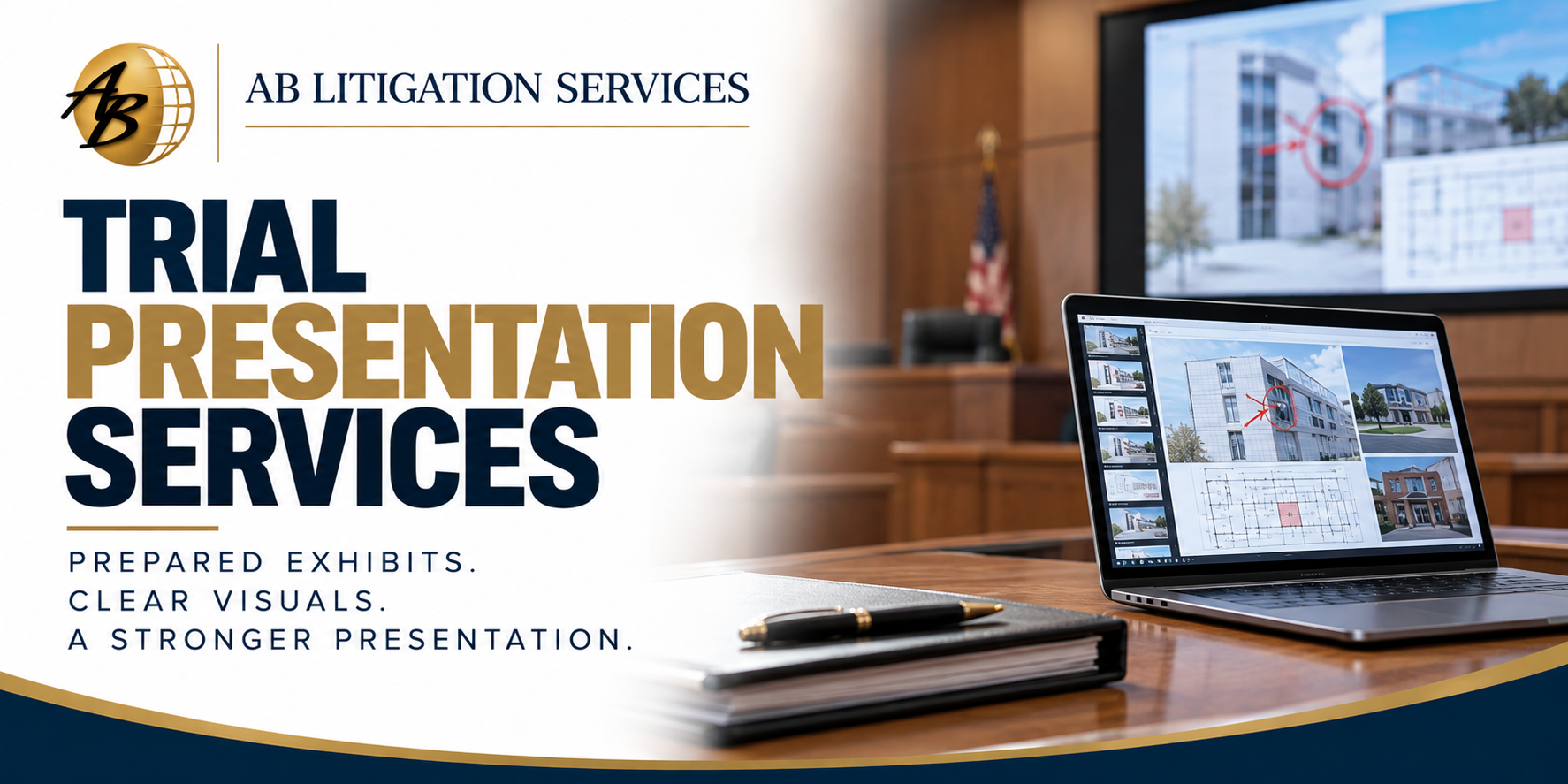
Trial presentation services help legal teams organize, prepare, and present digital evidence and multimedia before and during trial. AB Litigation Services provides trial presentation support that can include pretrial preparation, exhibit and multimedia management, video playback, visual development, and in-court presentation assistance.
The goal is straightforward: prepare the presentation materials and technology before they are needed, so the legal team can remain focused on the proceeding.
Why Trial Presentation Becomes a Logistical Challenge
A trial can involve information from many different sources.
Documents may need to be displayed on courtroom monitors. Deposition testimony may need to be located and played back. Photographs, diagrams, timelines, or other visuals may need to be presented alongside testimony. Exhibits can also exist in several digital formats.
Individually, each task may appear manageable. Together, they create another layer of trial preparation that someone has to organize, test, and operate.
Without a defined presentation workflow, attorneys and support staff can find themselves managing both the substance of the proceeding and the technology used to present it.
Professional trial presentation support separates those responsibilities.
What Are Trial Presentation Services?
Trial presentation services provide the preparation, organization, technology, and in-court support needed to present exhibits and multimedia during a trial or hearing.
Depending on the matter, trial presentation can involve:
- Organizing digital exhibits
- Preparing documents for courtroom display
- Managing photographs and other images
- Preparing and displaying graphics and demonstratives
- Creating visual aids to communicate complex information
- Preparing deposition video for playback
- Synchronizing video and transcript materials
- Managing multimedia files
- Preparing presentation technology
- Displaying requested materials during the proceeding
- Providing technical support in the courtroom
The work begins before anyone enters the courtroom.
Effective trial presentation requires understanding what materials will be used, how they are organized, and how they need to be displayed when called for.
Preparing Exhibits Before Trial
Exhibit preparation is one of the most important components of a trial presentation workflow.
Documents, photographs, video, and other materials need to be organized so they can be located efficiently. Digital materials may also need preparation before they are suitable for courtroom display.
The objective is not simply to collect everything in one place. It is to establish an organized system for retrieving and presenting the correct material when attorneys need it.
That preparation can also identify technical issues before trial begins.
A difficult-to-read document, incompatible video file, or poorly formatted image is much easier to address during preparation than during a proceeding.
Creating Graphics and Visuals for Trial Presentation
Not every concept is best communicated through a page of text.
A case may involve dates, relationships, sequences of events, technical information, financial data, locations, or other details that become easier to understand when presented visually.
Trial presentation services can include the development and preparation of graphics, demonstratives, and other visual materials that help organize information for courtroom presentation.
Depending on the needs of the legal team, those materials might include:
- Timelines and chronologies
- Charts and graphs
- Process diagrams
- Maps and location visuals
- Enlarged documents or excerpts
- Callouts highlighting portions of an exhibit
- Side-by-side document comparisons
- Photographs and enhanced images
- Presentation slides
- Other case-specific demonstrative graphics
The purpose of these visuals is clarity.
A timeline, for example, can organize a sequence of dates into a format that can be understood at a glance. A document callout can focus attention on a specific section without requiring the entire page to remain equally prominent on screen.
AB Litigation Services can work with the legal team to prepare visual materials around the information attorneys determine should be presented. The legal team controls the substance and strategy, while trial presentation support focuses on preparing the materials for effective visual presentation.
Preparing Deposition Video for Courtroom Playback
Deposition video introduces another type of media that may need to be incorporated into the trial presentation.
The relevant portions of recorded testimony need to be organized and prepared for playback. Depending on the workflow, video may also be synchronized with transcript text so the material can be managed more efficiently.
This is where AB Litigation Services’ broader litigation support capabilities can be particularly useful.
Legal videography and trial presentation are both part of AB’s service offering. When video captured earlier in the litigation needs to become part of a later presentation workflow, coordinating those services through the same litigation support relationship can reduce additional handoffs.
Documents Need to Be Readable on Screen
A document that works well on paper does not necessarily work well on a courtroom display.
Dense pages, spreadsheets, photographs, diagrams, and other materials may require preparation to make the relevant information easier to see.
Trial presentation technology can allow the team to display a full exhibit and then focus on particular portions as needed. Documents can be enlarged, and specific sections can be isolated or emphasized during presentation.
AB Litigation Services also provides document services, including scanning, imaging, printing, OCR, Bates numbering, and related document production.
That broader capability can help when source materials need additional preparation before becoming part of the presentation workflow.
What Does a Trial Presentation Technician Do?
A trial presentation technician manages the technical presentation of digital exhibits and multimedia during a proceeding. The role can begin with pretrial organization and preparation and continue through in-court display and playback.
Before trial, that can include organizing materials, preparing multimedia, testing files, and establishing a presentation workflow.
During the proceeding, the technician can assist with tasks such as displaying exhibits, calling up documents, presenting graphics, and playing prepared video as directed by the legal team.
The benefit is division of responsibility.
Instead of requiring an attorney or paralegal to simultaneously participate in the proceeding and operate presentation technology, the technical responsibilities can remain with someone focused specifically on the presentation system.
Trial Presentation Support Starts Before Trial
The most visible part of trial presentation happens in the courtroom. Much of the important work happens earlier.
Pretrial preparation provides an opportunity to organize exhibits, prepare multimedia, develop graphics, address file issues, and establish how materials will be accessed.
It also provides time to test presentation technology and resolve avoidable technical problems.
For the legal team, this preparation can create a more predictable workflow once the proceeding begins.
Rather than determining how to display a particular piece of evidence at the moment it is requested, the underlying materials and presentation system have already been prepared.
Trial Presentation Can Connect Multiple Litigation Services
Trial presentation rarely exists in isolation.
Materials used at trial may originate from depositions, legal video, transcripts, document productions, photographs, exhibits, and other sources accumulated throughout the matter.
AB Litigation Services provides a range of services that can support those different stages, including:
- Court reporting
- Legal videography
- Trial presentation
- Document services
- Transcription
- Interpreting and translation
- Videoconferencing
- Conference facilities
This integrated approach can reduce the number of separate providers a legal team needs to coordinate as a matter progresses from discovery and depositions toward trial.
It also reflects AB Litigation Services’ broader role as a litigation support partner rather than a provider of one isolated service.
Frequently Asked Questions About Trial Presentation Services
What are trial presentation services?
Trial presentation services help legal teams prepare, organize, and display exhibits, video, graphics, and other multimedia during trials and hearings. Services can include pretrial preparation as well as technical presentation support during the proceeding.
Can trial presentation services include graphics and demonstratives?
Yes. Visual materials can be developed and prepared to help organize information for courtroom presentation. Depending on the matter, these may include timelines, charts, diagrams, maps, document callouts, photographs, comparisons, and other demonstrative graphics.
Can deposition video be incorporated into a trial presentation?
Yes. Deposition video can be prepared for playback as part of the presentation workflow. AB Litigation Services also provides legal videography, allowing video and trial presentation needs to be coordinated through the broader litigation support team.
When should a legal team begin preparing trial presentation materials?
Preparation should begin early enough to organize exhibits and multimedia, identify materials requiring additional work, develop necessary visuals, and test the presentation workflow before the proceeding. The appropriate timing will depend on the volume and complexity of the materials involved.
Does a trial presentation technician decide what evidence or arguments to present?
No. Attorneys determine their legal strategy and what materials should be presented. AB Litigation Services provides litigation support and presentation services and does not provide legal advice.
Can AB Litigation Services Help With Other Trial Preparation Needs?
Yes. In addition to trial presentation, AB Litigation Services provides court reporting, legal videography, document services, transcription, interpreting and translation, videoconferencing, and other litigation support services.
Prepare Your Trial Presentation Before You Enter the Courtroom
Trial presentation works best when exhibits, multimedia, graphics, video, and technology have been organized before they are needed.
AB Litigation Services helps legal teams prepare presentation materials and manage the technical details involved in displaying them during proceedings. With more than 60 years supporting the legal community, our focus remains on dependable service, careful preparation, and professional litigation support.
From organizing digital exhibits and preparing deposition video to developing courtroom visuals and providing in-court presentation support, our team can help create a more organized presentation workflow.
Contact AB Litigation Services to discuss your trial presentation needs and begin preparing your exhibits, graphics, video, and multimedia for the courtroom.


