
Deposition Conference Rooms: What Law Firms Should Look for Before Booking
Choosing a location for a deposition involves more than finding an available meeting room. The space needs to support the proceeding, accommodate the participants, and provide an environment where attorneys, witnesses, court reporters, and other litigation professionals can work effectively.
A room that works well for a business meeting may not be the best choice for a deposition involving multiple attorneys, exhibits, remote participants, or legal videography.
For law firms evaluating deposition conference rooms, the right questions can help prevent unnecessary complications and ensure the space is prepared for the specific requirements of the proceeding.
Why the Right Deposition Conference Room Matters
Depositions require a professional environment where participants can focus on testimony without unnecessary distractions.
The room should provide adequate space, appropriate seating, reliable technology, and a layout that supports the court reporter and any additional litigation support professionals. When remote participants or video recording are involved, the requirements become more detailed.
Selecting a conference room designed to accommodate legal proceedings can simplify preparation and reduce the number of logistical issues attorneys and paralegals need to manage on the day of the deposition.
The goal is not simply to reserve a room. It is to choose a space that supports the proceeding from beginning to end.
Consider the Size and Layout of the Room
The number of participants is one of the first factors to consider when booking a deposition conference room.
A proceeding may include the witness, examining attorney, opposing counsel, court reporter, legal videographer, interpreter, and additional members of the legal team. Some participants may also need space for laptops, exhibits, or other materials.
A room that is too small can make the proceeding uncomfortable and complicate equipment placement. A room that is unnecessarily large may not provide the most practical arrangement for a smaller deposition.
Before booking, consider:
- How many people will attend in person?
- Will a court reporter and legal videographer both be present?
- Will an interpreter need additional space?
- Are exhibits or document displays required?
- Will remote participants join the proceeding?
- Does the room configuration support the way the deposition will be conducted?
Flexible room arrangements can be especially useful when the needs of a proceeding differ from a traditional business meeting.
Look for Privacy and a Professional Environment
Depositions often involve sensitive testimony, confidential information, and discussions that require an appropriate professional setting.
A dedicated conference room can provide a more suitable environment than a public meeting space or an improvised office arrangement.
When evaluating a location, ask about sound isolation, surrounding activity, and whether the room provides an environment appropriate for legal proceedings.
Privacy considerations may also extend beyond the room itself. Attorneys may need space for confidential conversations during breaks or a separate area to review materials with members of the legal team.
These details can make a meaningful difference during lengthy or complex proceedings.
Confirm Technology Requirements Before Booking
Technology should be evaluated based on the needs of the deposition, not simply whether the room has internet access.
A proceeding involving remote participants may require videoconferencing equipment, microphones, displays, and dependable connectivity. A videotaped deposition may require additional space and coordination for the legal videographer’s equipment.
Attorneys should confirm what technology is available and what needs to be arranged separately.
Questions to ask include:
- Is Wi-Fi available for all participants?
- Does the room support videoconferencing?
- Are microphones or audiovisual systems available?
- Can the room accommodate legal videography equipment?
- Are displays or other presentation tools available?
- Is on-site technical assistance available if needed?
Confirming these requirements in advance helps the litigation support team prepare the room appropriately and identify any additional equipment or services that may be necessary.
Plan for Court Reporting and Legal Videography
Court reporting is central to the deposition record, and the room should support the reporter’s ability to work effectively throughout the proceeding.
The court reporter needs an appropriate location, adequate workspace, and access to the participants. If realtime reporting is requested, additional technology or seating considerations may be necessary.
When legal videography is involved, the videographer also needs sufficient space for camera placement, audio equipment, and monitoring.
Coordinating these requirements before the deposition can help avoid last-minute adjustments once the participants arrive.
Working with a litigation support provider that can coordinate both the conference room and the professionals supporting the proceeding can make this process more efficient.
Think About Exhibits and Document Needs
Depositions frequently involve documents, exhibits, and materials that need to be reviewed or presented during testimony.
Depending on the matter, attorneys may need space for physical exhibits, access to printing or scanning, or technology to display electronic documents.
Before booking, consider how exhibits will be handled and whether the conference room provider offers services that can support those needs.
For complex or document-intensive proceedings, having access to additional resources on-site can reduce interruptions and help the legal team remain focused on the testimony.
Evaluate Location and Convenience
Location matters, particularly when attorneys, witnesses, and other participants are traveling from different areas.
A convenient conference room can reduce travel complications and make it easier for participants to arrive prepared and on time.
Consider proximity to hotels, restaurants, public transportation, and parking. For out-of-town participants, access to transportation connections may also be important.
Downtown locations can be especially practical for legal teams that need access to nearby accommodations and business services during multi-day proceedings.
Ask About On-Site Support
Even a well-planned deposition can involve unexpected changes.
A participant may need assistance connecting to a remote proceeding. Additional equipment may be required. A room configuration may need to be adjusted, or the legal team may need access to copying or scanning services.
On-site staff can help address these practical needs without requiring attorneys or paralegals to leave the proceeding to manage them independently.
When evaluating deposition conference rooms, ask what support is available during the reservation and whether additional services can be arranged in advance.
Consider the Needs of Multi-Day or Complex Proceedings
Some depositions require more than a single room for a few hours.
Multi-day proceedings, arbitrations, mediations, and complex litigation matters may involve larger groups, multiple rooms, changing schedules, or additional litigation support services.
In these situations, flexibility becomes particularly valuable.
A provider with multiple room sizes and configurations may be better equipped to accommodate different types of proceedings, from a small deposition to a larger arbitration or mock trial.
Planning these requirements early gives the legal team more options and helps ensure the space is appropriate for the full scope of the matter.
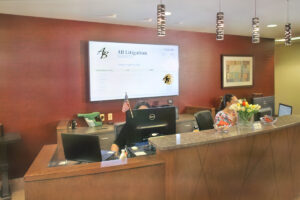
Denver Deposition Conference Rooms from AB Litigation Services
AB Litigation Services offers professional conference room facilities in downtown Denver, providing legal teams with a convenient setting for depositions, arbitrations, mediations, mock trials, and other proceedings.
Located at 216 16th Street, Suite 600, the facility offers five meeting rooms with capacities ranging from 10 to 40 people. Multiple room configurations are available, including traditional conference room, boardroom, classroom, videoconference, and legal proceeding arrangements.
The facility also offers sound-proof rooms, on-site staff, boosted Wi-Fi, videoconferencing, full-service audiovisual capabilities, equipment rental, and on-site copying and scanning.
For legal teams traveling to Denver, the downtown location provides convenient access to nearby hotels, restaurants, public transportation, and other business services.
These features allow attorneys to select a space based on the needs of the proceeding rather than adapting the proceeding to an unsuitable room.
More Than a Conference Room
One of the advantages of working with AB Litigation Services is the ability to coordinate the space alongside the litigation support services required for the proceeding.
Attorneys can arrange certified court reporting, legal videography, remote deposition support, interpreting, transcription, and other services through an experienced team familiar with the demands of legal proceedings.
That coordination can be particularly valuable when a deposition involves multiple participants, specialized technology, or changing scheduling requirements.
Instead of managing the conference room and each supporting service separately, legal teams can work through one point of contact to help ensure the necessary arrangements are in place.
Book Your Next Deposition with Confidence
The right deposition conference room should provide more than a professional appearance. It should support the people, technology, and litigation services needed to conduct the proceeding effectively.
By considering room size, privacy, technology, location, and on-site support before booking, attorneys can make more informed decisions and reduce avoidable logistical challenges.
AB Litigation Services provides one local point of contact for Denver deposition conference rooms and comprehensive litigation support, backed by nationwide and international reach. Whether your matter requires a single deposition in Colorado or coordinated proceedings across multiple jurisdictions, our team can help arrange the space, professionals, and services needed to keep your matter moving forward.
Contact AB Litigation Services to discuss your conference room and litigation support requirements for your next proceeding.